Bedding · Materials and care
Eco-Friendly Bedding Choices: A Closer Look at Coyuchi and Naturepedic Linen Duvet Covers
A linen duvet cover begins long before it reaches a bedroom: with flax in a field, fibers prepared for spinning, yarns woven into cloth, and finishing choices that shape how the fabric feels and wears. Coyuchi and Naturepedic both offer organic linen options, but their details differ. Comparing those details—fiber sourcing, certifications, construction, and care—can help you choose bedding that fits your comfort preferences and environmental priorities.
The landscape behind a linen duvet cover
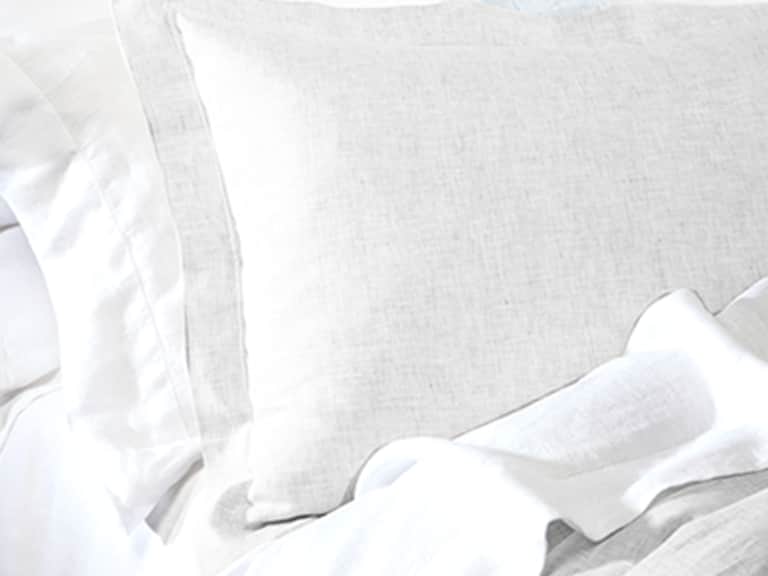
At first touch, linen is recognizable by its quiet irregularity. The surface is not perfectly uniform; small variations in yarn and weave give the fabric a gently textured hand. That character begins with flax, a plant whose stalks contain the fibers used to make linen. Once processed and spun, those fibers become a cloth valued for strength, airflow, and a dry, natural feel.
Those familiar qualities make linen an appealing alternative for people exploring bedding materials beyond conventional cotton. But “linen” is a description of fiber, not a complete account of how a product was made. It does not by itself tell you where the flax was grown, how the fabric was woven, what finishing processes were used, which standards were applied, or how long the finished cover might remain in use.
That distinction matters when shopping for eco-friendly bedding. A more useful comparison looks at the whole available story: the material and its origin, credible certification information, the construction details that affect everyday use, and the care routine needed to preserve the item. Even then, a product description is not a full life-cycle assessment. It offers helpful clues, not a complete measurement of environmental impact.
Coyuchi and Naturepedic provide two examples of organic linen duvet covers with different points of emphasis. Both describe flax-based linen and present the fabric as breathable and suitable for use across seasons. Coyuchi’s Organic Relaxed Linen Duvet Cover is described as GOTS-certified organic French linen woven in Portugal. Naturepedic’s Organic Linen Duvet Cover Sets are described as GOTS-certified organic linen made with flax grown in France, with a product specification identifying a 185-gram-per-square-meter fabric.
Start with the fiber—and read past the word “natural”
Linen comes from flax, but “natural” does not automatically mean that every step in a product’s supply chain has the same environmental profile. Growing conditions, processing, dyeing, finishing, transport, and product lifespan can all matter. A careful shopper can begin with the information a maker actually provides and avoid treating a single appealing label as proof of every environmental benefit.
In the product details available for these covers, Coyuchi identifies the material as 100% organic French linen and describes the flax as grown in France and the fabric as woven in Portugal. Naturepedic likewise describes organic flax grown in France; its linen duvet-cover specifications identify a GOTS-certified organic flax fabric and state that the finished product is made in India in a GOTS-certified organic facility. These are useful differences to note, though they are not a direct environmental ranking of either product.
The place where a crop grows is only one point in a product’s route. Fiber may be processed, spun, woven, finished, cut, sewn, and shipped through different locations. A transparent origin description helps consumers understand some of that journey, but it should not be mistaken for a full map of all production stages or a calculation of transport emissions.
For shoppers who value organic production, certification can provide another piece of evidence. GOTS—the Global Organic Textile Standard—is a textile-processing standard with requirements spanning organic fiber and additional environmental and social criteria across certified processing. The scope of any certification depends on the specific product and the facilities covered. Check the product’s current documentation and certification details rather than assuming that a brand-level statement necessarily applies identically to every item.
Naturepedic’s duvet-cover information also lists Made Safe certification for one organic relaxed linen cover. Because certifications and product specifications can vary by model or collection, confirm which claims apply to the precise cover you are considering. Certification is valuable context, but it does not tell you whether a particular weave will feel crisp or relaxed, whether the duvet will stay in place, or how the cover will behave in your laundry setup.
Coyuchi: relaxed texture and considered closures
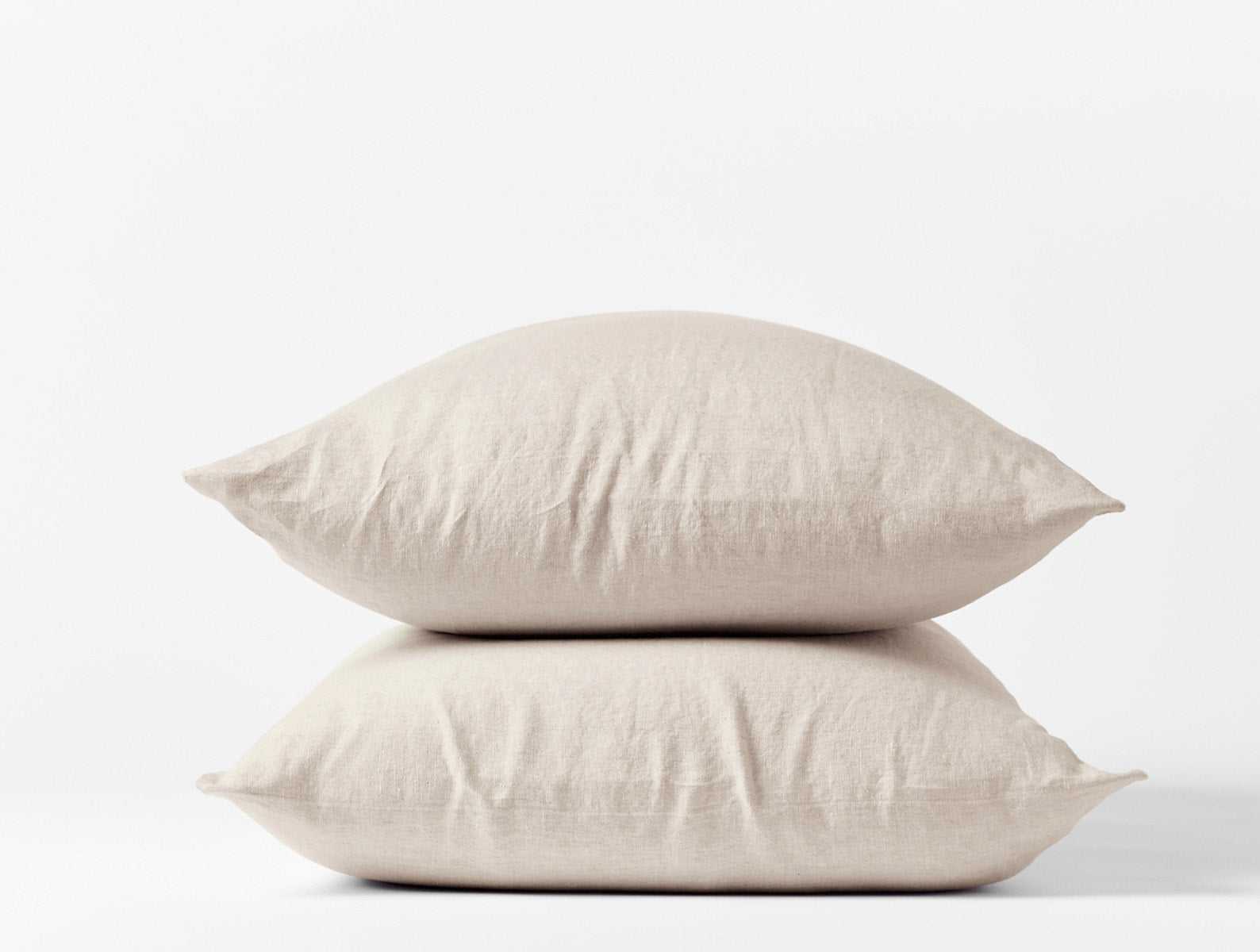
Coyuchi’s Organic Relaxed Linen Duvet Cover is presented as a soft, relaxed cover made from 100% organic French linen, woven in Portugal. The product details describe a breathable fabric intended for comfort across seasons and a texture that softens with use. That description may appeal to people who prefer linen’s familiar, gently rumpled character rather than a smooth, highly uniform finish.
Construction can make a difference once a cover is in regular rotation. Coyuchi specifies durable coconut-shell buttons, an interior flap, and inside ties. The ties attach to corresponding loops on a compatible duvet insert, helping limit shifting during sleep. The flap covers the button closure and offers an additional layer of fabric at the opening. These are practical details rather than decorative flourishes: they affect how easily the cover is fastened and how consistently the insert stays positioned.
A closure system is especially worth examining if you change inserts seasonally or wash the cover frequently. Buttons may be straightforward to replace if one is lost, but they take longer to fasten than some alternatives. Interior ties can help secure a duvet, but only when the insert has compatible attachment points. Before purchasing, compare the cover’s dimensions with the insert and check whether both have a corresponding tie arrangement.
Care guidance for Coyuchi’s organic relaxed linen cover calls for a cold, gentle wash with like colors, followed by low-temperature tumble drying; warm ironing is optional. Product details also advise avoiding bleach and using a plant-based detergent without bleach or whiteners for some related linen pieces. Follow the specific care label on the cover you own, since instructions may differ between items or change over time.
For more information, see the Coyuchi Organic Relaxed Linen Duvet Cover. Its listed material, origin, closure details, and certifications give shoppers concrete points to compare with their own priorities.
Naturepedic: a different specification and set format
Naturepedic’s Organic Linen Duvet Cover Sets are described as being made from certified organic flax grown in France and woven into a breathable, durable fabric. The available specifications identify the fabric as 185gsm GOTS-certified organic flax and linen and list production in India in a GOTS-certified organic facility. The stated weight offers one useful comparison point, but it does not independently establish softness, longevity, or a preferred feel. Weave, finishing, yarn quality, and personal sensitivity to texture matter too.
The Naturepedic set includes a duvet cover and two pillow shams. It also specifies corner ties intended to help secure the comforter inside. That arrangement may suit a shopper who wants matching pillow covers in the same package. Shams, however, are not the same as pillowcases: they are generally decorative or layering pieces, and their fit and opening style may differ. Check the listed dimensions against the pillows you plan to use.
Naturepedic lists the duvet cover in Full/Queen and King/California King sizes. Its care guidance says to machine wash warm, tumble dry low, and warm iron if desired; bleach is not recommended. Those instructions differ from the cold-water, gentle-cycle advice given for Coyuchi’s relaxed linen cover. Neither routine should be assumed to apply to every linen product. The care label supplied with the exact item should take precedence over general advice or instructions for another collection.
See the Naturepedic Organic Linen Duvet Cover Sets for the listed set contents, dimensions, care instructions, and material details. Reviewing the product specification before choosing a size is especially useful when the duvet insert is from a different brand, since nominal size labels do not always guarantee identical measurements.
What to compare before making a choice
A side-by-side comparison is less about declaring a winner and more about matching product details to the way you sleep, wash, and use bedding. The following questions can help make that evaluation more practical.
- What does the origin statement cover? Note the stated flax-growing location and the listed weaving or manufacturing locations. Treat them as disclosed stages, not a complete supply-chain map.
- Which certification applies to the exact item? Look for product-specific information, and check what the standard covers. Certification helps substantiate defined claims but does not answer every question about a product’s total impact.
- What is included? Coyuchi’s cited cover is described as a duvet cover. Naturepedic’s listed set includes the cover and two shams. Compare the contents and dimensions before assuming two packages are equivalent.
- How is the duvet secured? Coyuchi lists coconut-shell buttons, a flap, and interior ties. Naturepedic lists corner ties. Check whether the ties match your insert and whether the closure suits your habits.
- Which care routine fits your household? Compare the exact wash temperature, cycle, drying instructions, and restrictions. A cover that is easy to maintain is more likely to remain in regular use.
- What feel do you prefer? Descriptions such as “relaxed,” “breathable,” or “softens with use” are useful starting points, but subjective. Consider whether you like linen’s textured surface and how it feels against your skin.
- Will it fit your existing bedding? Measure the duvet insert and compare those measurements with the cover. Check pillow sham dimensions separately if included.
These checks can also prevent a common shopping mistake: focusing on a single specification, such as fabric weight or a certification mark, while overlooking fit, closure, and laundering. A technically appealing cover that is awkward to secure or incompatible with your insert may not be the best practical choice for your bedroom.
Care is part of a product’s environmental story
The most resource-conscious bedding purchase is not necessarily the one with the most elaborate list of claims. Keeping a well-made item in use for a long time can reduce how often it must be replaced. Care is one part of that longevity: wash only when needed, follow the care label, avoid overcrowding the machine, and use a drying method and temperature appropriate to the fabric.
For linen covers, a gentle approach helps avoid unnecessary wear. Fasteners can be closed before washing to reduce snagging, and washing similar colors together can limit color transfer. A roomy wash load allows fabric to move more freely than an overloaded drum. If you use a tumble dryer, follow the manufacturer’s temperature guidance and remove the cover when dry rather than leaving it exposed to prolonged heat.
There is no need to pursue a perfectly pressed finish if the cover is designed for a relaxed appearance. Linen naturally creases, and ironing is often optional. If you do iron, observe the care label’s temperature guidance. Likewise, do not add fabric softener simply because the product is linen; the item’s instructions should guide that choice.
Air-drying may reduce dryer energy use when conditions allow, but it is not always practical in every climate or household. A realistic routine that preserves the fabric and fits your circumstances is better than an idealized routine you cannot maintain. Drying fully before storage is important to avoid putting away damp bedding, which can develop an unpleasant odor or encourage mildew.
Care instructions vary notably between the products discussed here: Coyuchi’s listed cold, gentle cycle and Naturepedic’s listed warm machine wash are not interchangeable rules for all organic linen. Read the label attached to your duvet cover, especially if you have a different colorway or a newer version. When uncertain, the maker’s current written instructions are the most relevant guide.
Breathability, moisture, and the feel of sleep
Linen’s appeal is sensory as well as practical. Its yarns and weave create an airy, textured surface that many sleepers find comfortable in warm conditions. The fabric can absorb moisture and release it as it dries, but individual comfort depends on more than the cover: room temperature, humidity, the duvet insert’s fill, sleepwear, and personal temperature preferences all contribute.
A breathable cover cannot compensate for an insert that is too warm for the season. If you tend to overheat, consider the full bedding system rather than judging the cover in isolation. A lighter insert, suitable sheets, ventilation, and laundry habits may all affect how comfortable the bed feels. For colder months, layering allows you to adjust insulation without assuming one fabric will feel the same in every environment.
Linen also changes with use. Many linen fabrics become softer after laundering, though the pace and degree depend on the fiber, weave, and finishing. That evolving hand is part of the appeal for some people; others prefer the smoother, more uniform feel of cotton percale or sateen. Touch is personal, so descriptions and specifications can narrow a choice but cannot replace an opportunity to feel the fabric where that is available.
A balanced view of “eco-friendly” bedding
Environmental claims are strongest when they are specific. “Organic” describes a defined aspect of fiber production and processing when supported by an applicable standard; it does not mean a product has no environmental footprint. Cultivation still uses land and water, manufacturing requires energy and materials, and products travel through supply chains. A responsible comparison avoids turning one characteristic into an all-purpose verdict.
Instead, consider the evidence available and the choices within your control. A product with clear fiber information and relevant certification may align with your sourcing priorities. Durable construction, a reliable fit, and care instructions you can follow may support a longer useful life. Buying only what you need and maintaining it well can matter alongside the material choice.
It is also reasonable to ask what remains unknown. A product page may identify where flax was grown and where cloth was woven without reporting water use, energy sources, transport emissions, or comparative life-cycle data. Unless those figures are provided and their methods explained, avoid inferring a precise environmental advantage from origin or fiber content alone.
For a household seeking organic linen, Coyuchi and Naturepedic both provide a set of details worth examining. Coyuchi foregrounds a relaxed cover with coconut-shell buttons, an interior flap, and ties, along with French flax and Portuguese weaving. Naturepedic supplies a cover-and-shams set, corner ties, a specified fabric weight, and production information that includes India. Their care directions differ, so maintenance may be a deciding consideration.
Choosing the cover that belongs in your rotation
If the priority is a relaxed linen finish and a duvet cover with detailed fastening components, Coyuchi’s listed construction may merit closer attention. If you prefer a set that includes matching shams and want a stated fabric weight to add to your comparison, Naturepedic’s listed configuration may be more relevant. These are differences in product format and specification—not proof that one is universally more sustainable or more comfortable.
Before deciding, take three simple measurements and notes: the dimensions of your duvet insert, the preferred size of any shams, and the laundering method you can reliably use. Then compare the product’s current material and certification information with your priorities. If sourcing transparency is important, record which stages are named and which are not. If low-maintenance care matters most, pay particular attention to wash temperature and drying instructions.
In the end, an eco-friendly bedding choice is not made by the word linen alone. It emerges from a closer look at the crop, the cloth, the seams and closures, and the daily habits that carry a duvet cover from purchase to years of use. Coyuchi and Naturepedic offer two distinct routes into organic linen: one shaped by a relaxed cover and specified hardware, the other by a cover-and-shams set with its own stated fabric and care details. The better choice is the one whose evidence, fit, feel, and upkeep make sense for the bed—and are likely to keep it there.